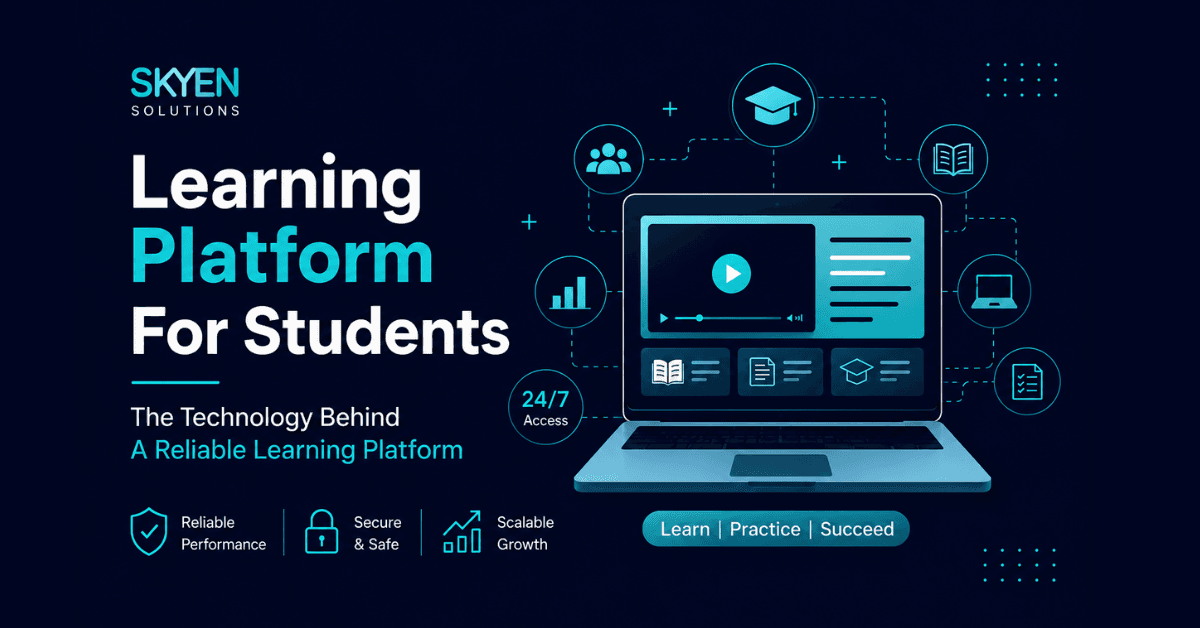
A learning platform for students is digital software that centralises lessons, practice materials, and progress tracking in one place, helping students learn more independently and helping schools monitor outcomes. The best platforms combine structured content with tools that adapt to how individual students actually learn.
Students today juggle textbooks, worksheets, and scattered online resources, often without any single place that ties their learning together. A learning platform for students solves this fragmentation by giving them one consistent environment for lessons, practice, and feedback. At Skyen Solutions, we build learning platforms for schools and education providers across Australia, and we've seen firsthand how the right platform design changes student engagement, not just convenience.
This guide explains what makes a learning platform genuinely effective, the technology decisions behind a strong build, and what schools should look for when evaluating options.
What Defines an Effective Learning Platform for Students
A strong learning platform does more than digitise existing worksheets. It structures content around clear learning objectives, tracks individual student progress, and surfaces gaps that a teacher might not catch in a traditional classroom setting.
Student learning tools work best when they reduce friction rather than adding another system for students to manage. If a platform requires constant teacher intervention just to function, it's not actually saving time or improving outcomes.
The most effective platforms also give students visibility into their own progress. When students can see what they've mastered and what still needs work, engagement tends to improve because the learning process feels less abstract.
Core Features Schools Should Expect
Adaptive content sequencing is now a baseline expectation. Rather than presenting every student with the same fixed curriculum path, effective platforms adjust difficulty and pacing based on how each student performs on earlier material.
Online learning support features, such as instant feedback on practice questions and access to explanatory content, help students work through difficulties without waiting for the next class session. This matters particularly for students who need extra time to grasp a concept.
Reporting dashboards for teachers are equally important. A school study platform should give educators a clear, at-a-glance view of which students are falling behind, which topics are causing the most difficulty across a class, and where intervention is actually needed.
The Technology Behind a Reliable Learning Platform
Modern learning platforms are typically built as web applications, using front-end frameworks like React alongside back-end systems built in Node.js or Python. This combination supports the real-time interactivity that adaptive learning tools require.
Database architecture needs careful planning, since a learning platform tracks large volumes of granular data — every question attempt, time spent per topic, and progress milestone. Relational databases like PostgreSQL handle this structured tracking data reliably at scale.
Security and data privacy are non-negotiable when the platform serves students, particularly younger ones. Compliance with Australian privacy standards for student data, along with proper access controls for parents, teachers, and administrators, needs to be built into the architecture from the outset.
Why Generic Software Often Falls Short in Education
Many schools initially try to piece together learning support using generic tools — spreadsheets for tracking, a document platform for content, and a separate quiz tool for assessment. This patchwork approach creates data silos that make it nearly impossible to get a clear picture of student progress.
Generic project management or content tools also weren't designed with pedagogy in mind. They lack the structured sequencing, mastery tracking, and age-appropriate interface design that a purpose-built learning platform provides.
A custom-built school study platform, by contrast, can be designed around actual curriculum requirements and the specific age group it serves, resulting in a tool that fits how teaching and learning genuinely happen rather than forcing a workaround.
Designing for Student Engagement, Not Just Functionality
Interface design matters enormously for student-facing tools. A cluttered or confusing platform will lose engagement quickly, regardless of how strong the underlying content is. Clean navigation and clear progress indicators keep students motivated to continue.
Gamification elements, when used thoughtfully, can meaningfully boost engagement — progress badges, streaks, or completion milestones give students tangible markers of achievement. These need to be balanced carefully so they support learning rather than becoming a distraction from it.
Mobile accessibility is increasingly important too. Many students study across devices, and a learning platform that works seamlessly on tablets and phones, not just desktop computers, removes another barrier to consistent use.
Evaluating a Learning Platform Development Partner
Schools and education providers should look for a development partner with genuine experience in educational software, not just general application development. Pedagogy-aware design decisions make a measurable difference in whether students actually use a platform consistently.
Ask specifically about data privacy practices, especially around how student information is stored, who has access, and whether the platform complies with relevant Australian education data standards.
At Skyen Solutions, we work closely with schools and education providers to build learning platforms that reflect real curriculum needs, prioritising both student engagement and the reporting clarity teachers rely on daily.
Final Thoughts
A well-built learning platform for students brings structure, feedback, and visibility to a process that's often scattered across disconnected tools. The schools seeing the strongest results are the ones investing in platforms designed specifically around their students and curriculum, not generic software adapted after the fact.
Looking to give your students a more connected, effective learning experience? Contact Skyen Solutions today for a free consultation, and let's design a learning platform built around your school's actual needs.
Frequently Asked Questions
What features should a learning platform for students include?
Core features include adaptive content sequencing, progress tracking, instant feedback on practice work, and clear reporting dashboards for teachers to identify where students need support.
How is a learning platform different from a school study platform students already use?
Many existing tools are generic and lack structured curriculum alignment. A purpose-built school study platform is designed around actual learning objectives and age-appropriate engagement features.
Is student data safe on a custom-built learning platform?
Yes, when the platform is built with proper security architecture, including encryption, role-based access controls, and compliance with Australian student data privacy standards.
Can a learning platform work across both desktop and mobile devices?
It should. Most modern student learning tools are built as responsive web applications, allowing students to study consistently across tablets, phones, and computers.
How long does it take to build a custom learning platform?
Timelines vary by scope, but most learning platforms take four to seven months to design, build, and test before a school-wide rollout.